
When Silence Is Expected, and Accountability Is Avoided
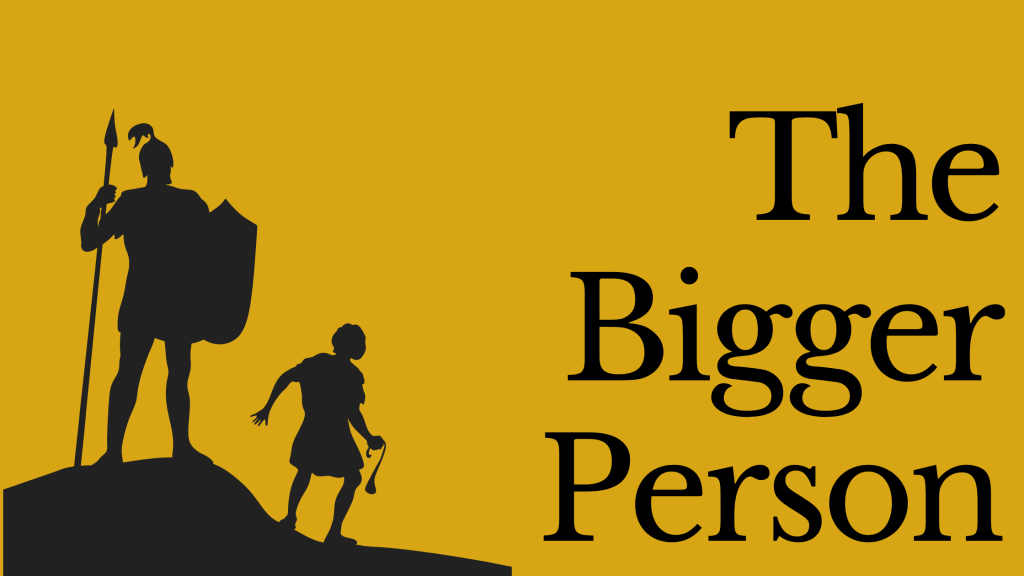
There is a phrase people often say when something unfair happens: “Be the bigger person.”
Sometimes it comes with another suggestion: “Try to see things from the other perspective.”
There is truth in that advice. Not every conflict needs escalation. Not every disagreement deserves a battle. Choosing restraint can prevent small issues from becoming bigger ones.
But somewhere along the way, the phrase “be the bigger person” has been misused. Instead of encouraging maturity, it is often used to excuse wrongdoing. Instead of promoting understanding, it sometimes becomes a convenient way to silence the person who was wronged.
Being the bigger person should never mean tolerating injustice. It should never mean accepting someone else’s mistake as your responsibility.
Fairness only works when accountability exists. Conflicts can be resolved with dignity when people acknowledge their mistakes. This also happens when systems work as intended and responsibilities are taken seriously. But when accountability disappears, something strange happens. The burden shifts. Instead of asking the person responsible to explain their actions, people begin asking the victim to stay quiet. Instead of correcting the wrong, people try to manage the discomfort around it.
The easiest solution becomes removing the person who speaks up.
I learned this lesson in a way I never expected.
Back in 2016, I was wrongfully terminated from my job because of someone else’s negligence. I had followed every step required in the process. Everything was documented. Every action I took had a record.
Nothing was hidden.
Nothing was improvised.
But the person responsible forgot one important detail: the system we were using was automated. The request she asked me to process moved forward exactly as the system was designed to do. When the result appeared, the mistake became visible, but instead of acknowledging it, the blame shifted.
Her oversight became my fault.
And I carried the consequence.
Naturally, I believed there would be an investigation. There should have been a review of the situation. That is why organizations create policies and procedures in the first place to determine responsibility when something goes wrong.
And yes, technically, there was a case.
But the reality behind the decision was simpler. I was the easier loss. I was replaceable. Removing me was faster than confronting the truth. Admitting the real mistake would have required challenging someone else within the system. It would have also meant standing by the rules that were supposed to guide the company.
Instead, they chose the path of least resistance.
I was removed.
During that time, many people gave me the same advice: “Be the bigger person.” They told me to reflect on the experience, to learn from it, and to move forward. They reminded me that I was young and that my future still held many possibilities.
In some ways, that part was true.
But something about that advice felt incomplete.
Because none of it addressed what actually happened.
None of it acknowledged that an injustice had taken place.
So instead of quietly accepting the situation, I did something that surprised even myself.
I filed a lawsuit against the company.
It was not a decision made out of anger alone. It was a decision rooted in clarity. I had spent enough time trying to explain myself to people who were not willing to listen. Conversations could easily be twisted. Narratives could easily be reshaped.
But facts are harder to manipulate in a court of law.
At the start of a new year, I filed the case. Many people expected the process to take years, but within a few months, the decision arrived.
I won.
For many people, the financial compensation would have been the highlight of that outcome. For me, the money was simply a bonus. The real victory was something deeper.
The truth was finally clarified in a legal setting.
Everything I had been accused of was examined objectively and proven incorrect. The records spoke for themselves. The law confirmed what I had known from the beginning.
In that moment, every false accusation lost its weight.
Sometimes I still think about what might have happened if I had chosen differently. What if I had followed the advice everyone gave me and simply been the bigger person? What if I had allowed the narrative to remain unchanged?
I would have carried a reputation that was never mine to begin with.
And perhaps more importantly, the real issue would have remained hidden.
Because when injustice goes unchallenged, it does not disappear.
It repeats itself.
Many people experience situations like this. Employees become convenient scapegoats for the mistakes of others. Workers are blamed because it is easier to remove them than to confront the truth. Leaders make decisions based on convenience instead of fairness.
In these situations, silence becomes the easiest solution. People avoid conflict. Witnesses stay neutral. Others choose not to get involved.
And slowly, accountability disappears.
The phrase “be the bigger person” becomes a polite way of saying, “Let it go so we don’t have to deal with it.”
People often choose silence over fairness. As a result, toxic systems survive. This happens not because everyone agrees with them, but because too many people decide not to challenge them.
Years later, I experienced another moment that reminded me of this lesson.
In 2025, chaos erupted on social media, and my family was dragged into it. Rumors spread quickly, and accusations circulated in ways that social media often amplifies. We did what responsible people should do. We sought legal advice, consulted the authorities, and followed the proper channels.
The first step, we were told, was to address the source of the problem.
So I filed a case.
The process moved slowly. There was no urgency from those responsible for addressing it. Requests for support were overlooked. Even when I reached out to the guidance counselor, I received no response.
And once again, the same advice appeared.
“Be the bigger person.”
But this time, there was another reason attached to it.
Because I was older.
I heard it in conversations and saw it written in comments: “Ka tigulang na sa imu.”
As if maturity meant silence.
As if being older meant carrying the burden of patience while the person responsible escaped accountability.
The logic was strange. The younger person who caused the chaos was excused because of age. The older person who was wronged was expected to endure it quietly.
Eventually, the case moved forward, and the outcome was again in my favor. The emotional weight of that process was heavy. This was not due to the truth being unclear. It was because the environment around me offered little support.
Some people were afraid to be involved.
Others simply chose not to deal with it.
And sometimes silence feels heavier than the accusation itself.
Now, in the present, I see something that concerns me even more. I see many people refusing to do what is right simply to avoid conflict. Avoidance has slowly become the norm. Instead of addressing problems and resolving them properly, people would rather look away from them altogether.
This pattern is becoming increasingly common.
Among the younger generation, I often see people who would rather rant publicly. They choose this instead of confirming the truth and resolving the issue directly. Emotions are expressed loudly, but accountability and resolution are rarely pursued with the same energy.
Among the older generation, the reason is different. Many are simply tired. They have seen too many conflicts, too many complications, and they would rather step aside than deal with another problem.
But this raises an important question.
People in positions meant to uphold fairness, righteousness, and justice must act. If they choose not to, then what is the purpose of those positions in the first place?
It is disheartening to see people bear the consequences of situations caused by those who failed to fulfill their responsibilities. When those responsible for maintaining order fail to do their duty, the burden remains. It simply shifts to someone else.
So we must ask ourselves honestly: Is this what we are tolerating now?
Are there no longer consequences for those who violate rules or neglect their responsibilities?
If accountability disappears, then what are the rules for? What are laws for?
Rules and laws exist to guide behavior, to protect fairness, and to ensure that responsibility is not ignored. But if they are not enforced, they become nothing more than words written on paper.
And if this is the direction we are moving toward, then the future becomes uncertain.
If fairness is not defended, we avoid accountability. When justice becomes optional, we face a system that gradually loses its integrity.
Today, I understand the phrase “be the bigger person” in a different way. Yes, there are moments when patience and restraint are necessary. But being the bigger person should never mean abandoning justice.
It should never mean accepting blame for something you did not do.
More importantly, I have realized something else.
I do not only want to be the bigger person.
I want to be a better person.
A better person stands for what is right. A better person values fairness and accountability. A better person understands that responsibility should not depend on age, status, or position.
Right and wrong do not change depending on who holds power.
They remain the same.
So perhaps the real question is not whether someone should be the bigger person.
Perhaps the real question is this:
Why are we so comfortable asking victims to stay silent instead of asking those responsible to be accountable?
Until we answer that question honestly, the cycle will continue.
And fairness will remain something people talk about rather than something they truly practice.
If this is what it has become now, then all we can say is this:
God help us.
 CM Digital Marketing Services
Leave a comment